
Stone masonry in Mission TX - stone walls planned for your yard and our heat
Planning a stone wall or stone on the front of your house? We'll help you pick dry stacked or mortared, then build it right.
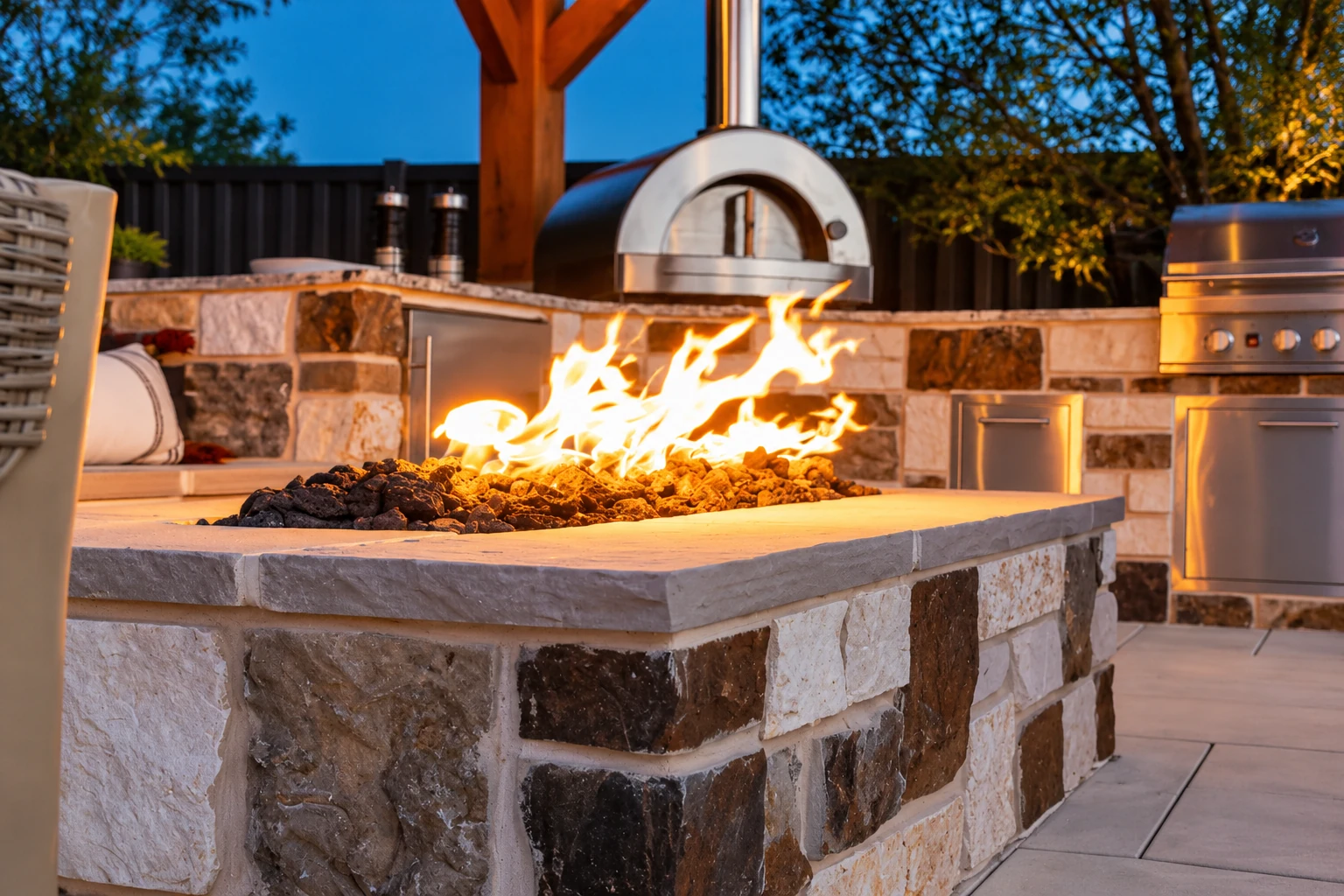
What goes into building a stone wall in Mission?
Stone masonry in Mission, TX means building walls, columns and planters from stone, either stacked dry or set in mortar, or facing a wall with stone veneer, so you end up with stonework that fits the way your property is laid out.
Most people who call me have a spot in mind already, a sloped bed that needs holding back, a front yard that wants a low wall, or a house front they'd like faced with stone veneer. The price moves with how much wall face there is, how tall it gets, the stone you choose, whether it's mortared or dry stacked, and how easily we can get stone and a crew to the spot. The schedule turns on stone delivery, any city permit or review, and the heat, because fresh mortar can't be rushed in a Valley summer. I walk the job with you and explain each part before you see a number.
How we build your stone masonry project
Every stone job starts with one choice, dry stacked or mortared, so I talk through how each looks and what it asks of your property before we touch anything. A dry stacked wall has a looser, natural look and depends on a well-packed base, while a mortared wall looks more finished and needs a solid footing, and the height you want often settles it. Once we've picked, our crew marks the line, digs out and packs the base, then sets the stone one row at a time so each piece sits firm on the ones below it. Manufactured stone veneer is made to go on with a cement-based mortar over a backing surface, so if you're adding veneer I'll show you what we're setting it on. When it's hot out, we shade fresh stonework so it doesn't dry too fast, and we clean up the site before we leave.
Stone work often sits right next to older masonry. If the brick on the house beside your new wall has crumbling joints, brick pointing replaces the worn mortar so old and new look like they belong together. And if a wall or the house itself shows cracks that keep growing, I'll check whether the cause is underneath before we build, because some of those calls really need foundation repair first.
Why Mission homeowners call Premier Mission Concrete and Masonry for stone work
I walk every job myself
I come out to look at every job and give the estimate, and I explain each part of it as we walk your yard. A crew lead runs the work on site with our masons, and I check in along the way, so the person you can ask has already seen your property.
In business since 2013
I learned this trade working beside masons on a busy building company's jobs, then started this business in 2013. We're known for repair work that matches what's already there, which matters when new stone sits beside old brick.
Licensed and insured on every job
We're licensed and insured for the work we do on your property. That way you're not the one carrying the risk of a crew working in your yard.
City permits handled for you
When a stone job needs a city permit, we take care of the paperwork with Mission's Inspections Division and build the wait into the schedule. Work that needs a permit and starts without one faces a double permit fee from the city, so we don't skip that step.
What matters most is picking the right wall for your yard, not the biggest one. When you're ready, call (956) 379-6055 or send us your project with the address, how tall you want the wall, the stone you like and a few photos of the spot.
Get a stone masonry estimate at your property
We reply within one business day. Your estimate is free, done on site and comes with no obligation. After you send the form, we'll set a time for me to come out, walk the job with you and explain each part of it.
Stone walls, columns and veneer
Common questions about stone masonry work
Does a stone wall over 4 feet tall need an engineer?
Plan on it. One building guide says a wall more than 4 feet tall probably needs to be mortared, and that any wall over 4 feet should be engineered. If you want something taller, expect an engineered, mortared wall rather than a dry stacked one, and I'll tell you that at the walk-through.
How much does stone masonry cost in Mission, TX?
Brick and masonry work in the McAllen area usually costs about $8 to $25 per square foot. That's the going rate around here, not our price, and where a stone job lands in it comes down to the things I listed above, mostly the stone, the height and mortared versus dry stacked. Your own number comes from the on-site estimate, where I go over each part of it with you.
Do I need a city permit for a stone wall in Mission, TX?
It depends on the project, and the city's rules don't name stone walls directly, so we check before we start. Mission's Inspections Division reviews building permit applications for all new buildings, and any concrete or asphalt slab valued at $100 or more needs a permit. The Inspections Division is the office that answers it for your job, and when a permit is needed, it goes into the plan like I described above.
Does my project need historic district approval in Mission?
If your home is in Mission's Historic Preservation Overlay District, most likely yes, because most projects there also need approval from the city's Historic Preservation Commission. Tell me early, so that review is part of the schedule from the start instead of a surprise later.
How long does new stonework need protecting from the heat?
A trade group's veneer specification calls for protection before, during and for 72 hours after the work when it's above 100°F, or above 90°F with wind over 8 mph. That covers a lot of summer days here, which is why we shade fresh stonework. Whoever you hire, ask how they'll shield new stone on a hot day.
What is the best mortar for repairing an old stone wall?
One that isn't too hard for the stone. A mortar that's too hard can push movement stress into softer stone instead of letting the joint take the wear, and the joint is the part that's meant to be replaced over time. That's why I look at the old mortar and the stone before we choose a mix for any repair.
Other work that often goes with stone
- Brick pointing
When the mortar between your bricks has gone sandy or dropped out in spots, pointing fills those joints fresh so water stays out and the wall looks tidy again.
- Foundation repair
Stair-step cracks in brick, doors that stick or a slab that's sunk usually point below the wall, and fixing the foundation first gives new masonry a steady base.